Why Fieldstone Foundations Are Different (and Why They Leak)
If you own a home in Black Rock or Stratfield, there is a good chance your foundation is made of fieldstone. These walls were built by stacking local stones and binding them with mortar, often lime-based, and they have stood for a century or more. That longevity is impressive, but fieldstone behaves very differently from modern poured concrete. The stones themselves are usually durable; the mortar between them is the weak point. Over decades, mortar erodes, cracks, and falls out, leaving gaps where water can enter. Because fieldstone walls are thick and uneven, water also moves through them slowly, which means a leak you notice today may have started weeks ago.
Another challenge is that fieldstone foundations were rarely waterproofed in any modern sense. Builders relied on the mass of the wall and exterior grading to shed water. When gutters clog, soil settles against the house, or a driveway slopes toward the foundation, that old system fails. In Black Rock, where many Victorian home basements were finished or used as living space, the results are dampness, efflorescence (the white powder on stone), and musty odors. Understanding these dynamics is the first step toward effective Foundation Waterproofing for an older home.
Foundation Repointing: The First Line of Defense
Before any drainage system is installed, the mortar joints themselves need attention. Foundation repointing is the process of grinding out deteriorated mortar and replacing it with a compatible mix. On fieldstone, this is skilled work: the mortar must be softer than the stone so it can flex with seasonal movement, and it must match the existing wall's breathability. Using hard modern mortar on an old fieldstone wall can trap moisture and cause the stone faces to spall and flake. A proper repointing job restores the wall's structural integrity and closes the open joints that let water pour in during heavy rain.
Homeowners in Stratfield often ask whether repointing alone will stop leaks. Sometimes it does, especially when the leak is localized to a few crumbling joints. But repointing is rarely the whole answer. It is one part of a broader strategy that may include exterior grading, gutter improvements, and interior drainage. If you are seeing water on the floor after storms, a free estimate can help determine whether repointing, drainage, or both are needed. Skipping the assessment and patching only the visible cracks usually leads to repeat problems within a season or two.
Historic Home Basement Waterproofing: What Works on Old Walls
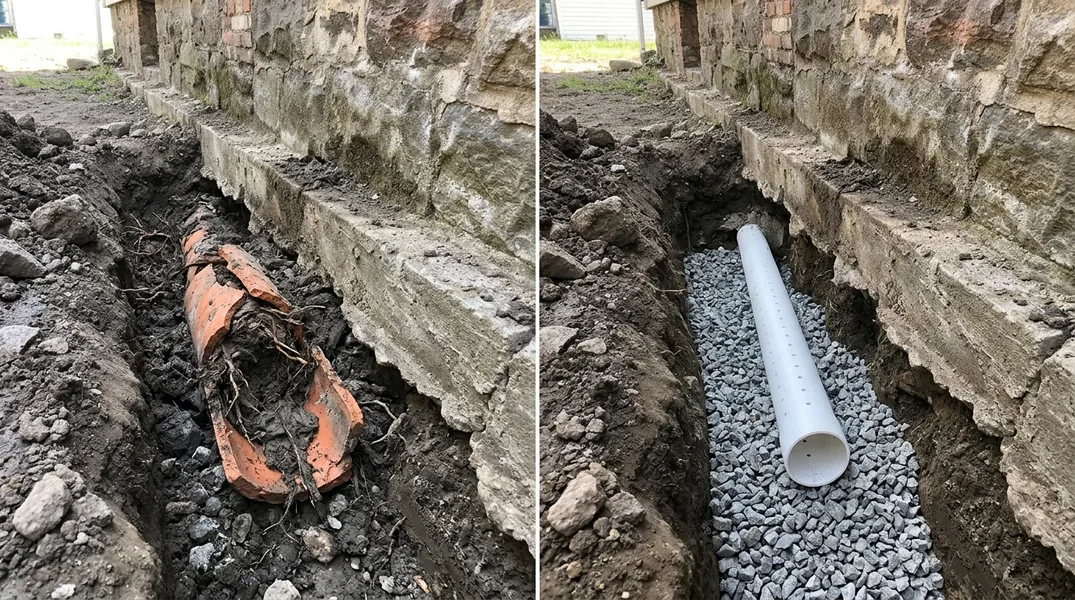
Modern waterproofing methods must be adapted for historic homes. Spray-on rubberized membranes and rigid exterior panels are common on new construction, but they can trap moisture inside a fieldstone wall and cause long-term damage. For a Victorian home basement, the goal is to manage water while allowing the wall to breathe. That often means an Interior Drain Tile System that collects water at the base of the wall and directs it to a sump pump, combined with a vapor barrier on the interior side. This approach does not fight the wall's natural moisture movement; it controls the water after it enters, which is safer for old masonry.
Exterior approaches still have a place. Exterior Basement Waterproofing can involve excavating down to the footing and installing drainage and a compatible membrane, but on fieldstone this must be done carefully to avoid undermining the wall. Many homeowners in Bridgeport choose a combined approach: repoint the mortar, improve exterior grading and gutters, and install interior drainage. That layered strategy addresses both the source of the water and the path it takes once it reaches the foundation.
Basement Waterproofing Near Me: When to Call a Professional
Not every damp spot means a crisis. But there are clear signals that an old foundation leak needs professional attention. If you see standing water after storms, white efflorescence that returns after cleaning, or mortar that crumbles when you touch it, the wall is telling you something. Musty odors and high humidity in a finished basement are also signs that moisture is moving through the fieldstone. In Black Rock, where homes sit close together and lot grading can be tricky, these issues often worsen quickly once gutters or downspouts fail.
When you search for basement waterproofing near me, look for a contractor who understands fieldstone specifically, not just concrete. Ask how they handle mortar compatibility, whether they recommend interior or exterior solutions, and how they protect the wall's breathability. A good contractor will explain the tradeoffs and not push a single method for every home. Bridgeport Waterproofing works throughout the area, including nearby Fairfield and Stratford, and can assess your foundation's condition before recommending a scope of work. Call (475) 256-5668 to schedule a visit.
Foundation Repair and Repointing Cost in Bridgeport: What to Budget
Costs for fieldstone work vary widely because every wall is different. Repointing is usually priced by the linear foot or square foot of wall area, and heavily deteriorated sections cost more because they require more removal and careful matching. Interior drainage systems are priced by the length of the perimeter and the complexity of the sump and discharge setup. Exterior excavation adds cost for digging, disposal, and restoration of landscaping. For a typical Black Rock or Stratfield home, homeowners should expect a range rather than a single number, and any contractor who quotes without seeing the wall is guessing.
It also helps to think in terms of priorities. Repointing and gutter corrections are often the most cost-effective first steps, and they can significantly reduce water intrusion before you invest in a full drainage system. A reputable contractor will break the work into phases so you can budget over time. For a clearer picture of typical pricing in the area, review the company's pricing page or request a written estimate. Investing in proper Basement Waterproofing now is almost always less expensive than repairing a failed foundation or mold-damaged finished basement later.
Protecting Your Historic Home for the Long Term
Fieldstone foundations are not a liability if they are maintained correctly. The key is to treat them as living masonry that needs breathability, compatible materials, and sensible water management. Keep gutters clean, make sure downspouts discharge well away from the house, and watch for new cracks or crumbling mortar after severe weather. In neighborhoods like Black Rock and Stratfield, where mature trees and older landscaping can hide grading problems, a seasonal walkaround is worth the effort. Small corrections early prevent the kind of water damage that requires major repair.
If you are unsure about the condition of your foundation, bring in someone who works with historic homes regularly. Bridgeport Waterproofing serves homeowners throughout Trumbull and the surrounding communities, and can help you decide whether repointing, drainage, or a combination is right for your home. A dry basement starts with understanding what your fieldstone wall needs, and that begins with a conversation. Reach out for a free estimate or call (475) 256-5668 today.
Looking for a professional basement waterproofing contractor in Bridgeport? Bridgeport Waterproofing responds fast for all your basement waterproofing needs.
Get a Free QuoteOur services: Basement Waterproofing · Interior Drain Tile System · Exterior Basement Waterproofing