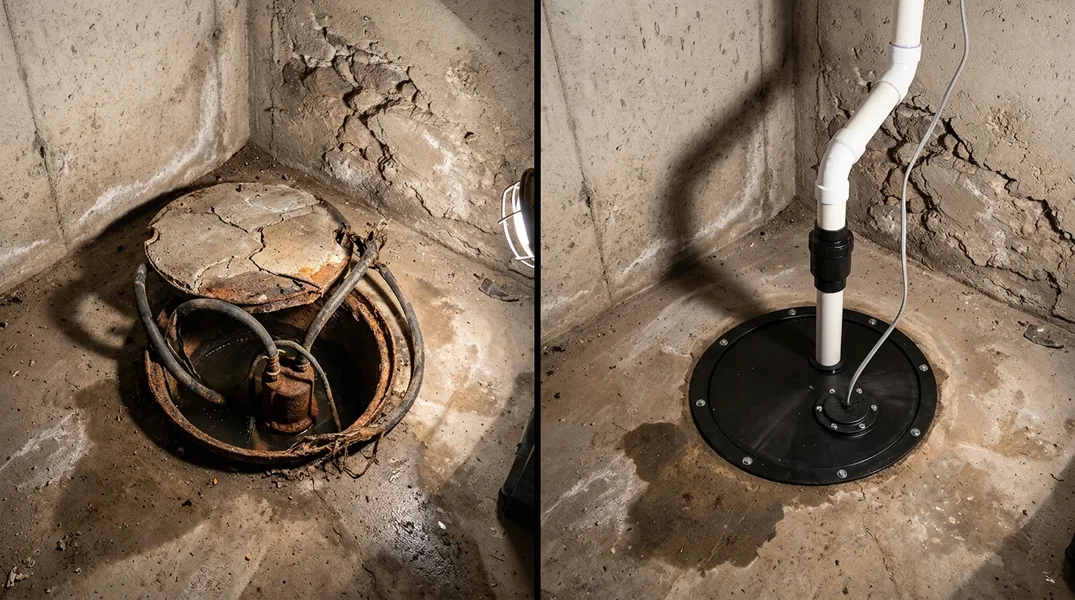
Why Nor'easter Season Is a Serious Threat to Bridgeport Basements
If you live in Bridgeport, you already know that Nor'easters are not just a weather forecast talking point. These powerful coastal storms can dump several inches of rain in a matter of hours, and when you combine that with high tides and already saturated ground, the result is often a basement that fills up faster than your sump pump can handle. The geography of coastal Connecticut makes the region especially vulnerable: low-lying neighborhoods, older housing stock, and a water table that rises quickly during prolonged storms all put your below-grade space at risk.
What many homeowners do not realize is that the majority of sump pump failures happen during the first major storm of the season, precisely because the pump has been sitting idle for months. A pump that ran fine last spring may have a stuck float, a clogged intake, or a check valve that no longer seals. Taking a few hours in early fall to inspect and test your system is one of the cheapest and most effective ways to protect your home from storm basement flooding. If you are unsure where to start, a professional Basement Waterproofing inspection can identify weaknesses before the first nor'easter arrives.
Sump Pump Maintenance Checklist for Coastal Connecticut Homeowners
Start by unplugging the pump and removing the lid from the sump pit. Look for debris, silt, or gravel that may have accumulated around the float and intake screen, and clean it out by hand. Next, plug the pump back in and slowly pour a bucket of water into the pit until the float triggers the pump. The pump should kick on promptly and empty the pit without unusual noises or vibration. If it stumbles, hums without pumping, or fails to shut off, you likely have a failing switch or a blocked impeller that needs attention before storm season.
While you are in the pit, inspect the discharge line for cracks or loose connections and confirm that water is being routed well away from the foundation. A discharge line that dumps water right next to the house simply returns it to the same soil that surrounds your foundation, which can undermine your Foundation Waterproofing efforts. Finally, test your pump's performance under load by running a garden hose into the pit at full pressure and watching how quickly the pump cycles. If it struggles to keep up with a garden hose, it will almost certainly fail during a Nor'easter.
Don't Overlook the Sump Pump Check Valve
The sump pump check valve is one of the most overlooked components in a basement water management system, yet it plays a critical role during storm season. This one-way valve prevents water from flowing backward down the discharge pipe and back into your sump pit after the pump shuts off. Without a functioning check valve, every cycle sends a slug of water back into the pit, forcing the pump to work harder and cycle more frequently. During a long nor'easter, that extra wear can be the difference between a pump that lasts the storm and one that burns out at 2 a.m.
To test the check valve, listen carefully after the pump shuts off: you should hear a distinct thud as the valve closes, and you should not hear water rushing back into the pit. If you hear gurgling or the pump short-cycles repeatedly, the valve may be stuck open or clogged with debris. Check valves are inexpensive and straightforward to replace, but they must be installed in the correct orientation. If your system lacks a check valve entirely, or if you are unsure of its condition, have it evaluated as part of a broader Interior Drain Tile System check before storm season begins.
Battery Backup Sump Pump: Your Safety Net During Power Outages
Nor'easters frequently knock out power, and a sump pump without electricity is simply a plastic bucket in a hole. A battery backup sump pump runs on a charged battery when the primary pump loses power, giving you hours of protection exactly when you need it most. For homeowners in Fairfield, Stratford, and Trumbull, where prolonged outages during coastal storms are common, a backup system is not a luxury but a practical necessity.
Maintenance for a battery backup is different from the primary pump. Test the battery under load at least once a month, and replace it every three to five years depending on the manufacturer's recommendation. Clean the backup pump's intake screen, confirm the float moves freely, and check that the charger is maintaining a full charge. Many modern backup systems also include alarms and Wi-Fi alerts, which are invaluable if you are away from home during a storm. If you want a professional assessment of your backup setup, schedule a free estimate with our team before the season starts.
Sump Pump Maintenance Near Me: When to Call a Professional
Some maintenance tasks are well within reach for a handy homeowner, but certain warning signs call for a professional evaluation. If your pump is more than seven to ten years old, runs constantly, trips the circuit breaker, or has visible rust and corrosion, replacement is likely more cost-effective than repair. Similarly, if your pit fills faster than the pump can discharge during a heavy rain test, your system is undersized for the water volume your foundation receives. A professional can measure your inflow rate and recommend the right pump capacity, which matters enormously during a Nor'easter.
Homeowners searching for sump pump maintenance near me in the Bridgeport area should also consider whether their broader drainage system is up to the task. A pump is only as effective as the drainage path feeding it, and a failing Exterior Basement Waterproofing system or clogged perimeter drain can overwhelm even a brand-new pump. A thorough inspection ties all these pieces together and gives you a clear picture of your home's readiness. Call Bridgeport Waterproofing at (475) 256-5668 to schedule a pre-season evaluation.
Sump Pump Service Cost in Bridgeport: What to Budget
Understanding what sump pump maintenance and upgrades cost helps you plan ahead and avoid emergency spending during a storm. A basic maintenance inspection is typically modest, while replacing a check valve is one of the least expensive repairs you can make. Battery backup systems vary widely in price depending on capacity and features, and a full primary pump replacement falls in the mid-range. Because every home's setup is different, we recommend reviewing our pricing page or requesting a written estimate for your specific system.
The most important budgeting advice is this: preventive maintenance almost always costs less than storm damage cleanup. A flooded basement can mean ruined flooring, damaged mechanicals, mold remediation, and insurance headaches that far exceed the price of a new pump or backup system. Spending a little now to confirm your pump, check valve, and backup are all functioning properly is the smartest investment you can make before Nor'easter season. Reach out to Bridgeport Waterproofing today for a free estimate and enter storm season with confidence.
Looking for a professional basement waterproofing contractor in Bridgeport? Bridgeport Waterproofing responds fast for all your basement waterproofing needs.
Get a Free QuoteOur services: Basement Waterproofing · Interior Drain Tile System · Exterior Basement Waterproofing